

The idea of open access in academia isn’t just a technical shift, it’s a fundamental rethinking of how knowledge circulates through society, particularly when viewed through the lenses of sociology, philosophy, and the broader structures of power that shape intellectual life. For disciplines concerned with the organization of human relationships, the production of meaning, and the dynamics of collective action, the question isn’t whether open access will dominate but how it will reshape the very terms of scholarly exchange. What happens when the gatekeeping mechanisms of traditional publishing, paywalls, subscription models, and the prestige of elite journals, are systematically dismantled? The answer lies in understanding the trade-offs between different models of knowledge distribution, the unintended consequences of each, and the philosophical underpinnings that justify them.
Knowledge as a Public Good vs. the Market Logic of Scholarly Exchange
The traditional model of academic publishing treats research as a commodity, where access is contingent on financial transactions between institutions and publishers. This system reinforces hierarchies: universities with deep pockets can afford subscriptions, while smaller institutions or researchers in the global south often rely on paywalled journals, creating a two-tiered system of knowledge consumption. In contrast, the open access movement frames research as a public good, a resource that should be freely available to all, regardless of institutional affiliation or geographic location. This shift aligns with philosophical traditions that emphasize the collective ownership of knowledge, such as the utilitarian idea that ideas should be disseminated to maximize societal benefit. However, the market logic still lingers in hybrid models, where authors pay article processing charges (APCs) to publish in open-access journals, effectively outsourcing the cost of dissemination to individual researchers rather than spreading it across the academic community. The tension here isn’t just financial; it’s ideological. Does knowledge belong to those who produce it, or to those who can most effectively use it?
The German Committee for Future Earth provides a case study in this debate. By advocating for open-access policies in sustainability science, the committee argues that restricting access to research on climate change or biodiversity undermines the very goals of these fields, collaboration, rapid dissemination, and policy impact. Yet, the same committee must navigate the reality that open access isn’t universally embraced. Some disciplines, particularly those with strong disciplinary identities or those where peer review is tightly controlled by elite institutions, resist the erosion of traditional gatekeeping. The result is a fragmented landscape where open access is both a tool for democratization and a site of ongoing negotiation over who gets to decide what counts as legitimate knowledge.
The Role of Power in Determining What Gets Published and Who Gets to Read It
Power isn’t just about who controls the purse strings, it’s about who controls the narrative. The academic publishing industry, long dominated by a handful of commercial publishers, has historically privileged certain types of research: quantitative studies, those aligned with mainstream scientific paradigms, and work produced in English-speaking countries. Open access, in theory, disrupts this by removing financial barriers, but it doesn’t automatically dismantle the cultural and institutional biases that shape what gets published. For example, journals that adopt open-access models may still favor research that fits within established disciplinary frameworks, marginalizing work that challenges dominant paradigms or comes from non-Western contexts.
The United Nations’ emphasis on equity in open science highlights this problem. When the UN promotes open-access policies, it often does so with the goal of ensuring that research from the global south isn’t siloed in local languages or unpublished formats. Yet, the shift to open access doesn’t guarantee that non-Western knowledge systems will be integrated into global academic discourse. The risk is that open access becomes another layer of Western academic dominance, where the terms of engagement, peer review, citation metrics, and publication standards, remain largely unchanged. The question then becomes: How do we ensure that open access isn’t just about removing paywalls but about redefining the very criteria by which knowledge is valued?
A related issue is the role of local knowledge. Indigenous and traditional knowledge systems, which often operate outside the academic framework, are frequently excluded from open-access debates. When these systems are incorporated into open-access platforms, they’re often repackaged to fit Western academic standards, losing their original context and meaning. The challenge is to create open-access models that respect the autonomy of local knowledge while still making it accessible to broader audiences. This requires more than just technical solutions, it demands a philosophical reckoning with how knowledge is produced, who owns it, and how it should be shared.
Quality Control in an Open World: Peer Review and the Illusion of Neutrality
The promise of open access is often tied to the idea that transparency will improve the quality of research. Yet, the peer-review process itself is far from neutral. Traditional peer review, even in open-access journals, is often conducted by a narrow slice of the academic community, those with access to the same elite institutions and networks. This can lead to a situation where the very people who benefit from the status quo are the ones deciding what gets published. The result is a self-reinforcing cycle where marginalized voices are excluded not just by paywalls but by the gatekeepers of peer review.
For a first-hand perspective, Lancaster University Library explains the author experience with open access monographs, and you can watch it right here.

Some open-access journals have attempted to address this by diversifying their review boards or adopting more inclusive peer-review models, such as open peer review, where reviewers are publicly identified and their feedback is shared with readers. However, even these models can reproduce biases if the pool of potential reviewers remains homogenous. The philosophical question here is whether quality in academia can ever be divorced from power. If peer review is inherently a political act, shaping which ideas are legitimized and which are dismissed, then open access doesn’t just democratize access; it also forces us to confront the political dimensions of knowledge production.
The academic publishing market, which grew at an 8% compound annual growth rate in recent years, is a testament to the enduring power of traditional models. Yet, even within this market, open-access journals are carving out a space. The key difference lies in how they approach quality. Some open-access journals prioritize rapid dissemination and accessibility, even if it means relaxing certain standards. Others maintain rigorous peer-review processes but charge authors high APCs, effectively shifting the cost burden to individual researchers. The trade-off is clear: speed and accessibility versus depth and prestige. The choice depends on what values a discipline prioritizes, innovation and equity, or tradition and hierarchy.
The Economic Realities of Open Access: Who Pays, and What Does It Buy?
The financial sustainability of open access is a contentious issue. Traditional publishing models rely on institutional subscriptions, which spread the cost across universities and research libraries. In contrast, open-access models often require authors to pay APCs, which can range from a few hundred to several thousand dollars per article. This shift places an uneven burden on researchers, particularly those in countries where funding for APCs is scarce. The result is a new kind of exclusion: not just those who can’t afford subscriptions, but those who can’t afford to publish.
Some open-access journals have responded by offering waivers or discounts for researchers from low-income countries, but these solutions are patchwork at best. The deeper issue is that open access isn’t just about removing paywalls, it’s about rethinking the economics of knowledge production. If we accept that research is a public good, then the cost of publishing should be borne by society as a whole, not by individual researchers. This could mean government funding for open-access journals, institutional mandates requiring open access, or even a return to the pre-commercial era of academic publishing, where universities and research councils directly funded journals. The challenge is to find a model that doesn’t simply replace one set of gatekeepers with another.
The European Union’s push for open-access policies offers a glimpse of what’s possible. By requiring publicly funded research to be made openly available, the EU has created a system where the cost of publishing is distributed across taxpayers rather than individual researchers. This model aligns with a broader philosophical tradition that sees knowledge as a collective resource, not a private commodity. However, it also raises questions about accountability. If research is publicly funded, who decides what gets published, and how do we ensure that the process remains transparent and inclusive?
Cultural Shifts and the Psychology of Academic Work
The transition to open access isn’t just a technical or economic issue, it’s a cultural one. For generations of academics, publishing in prestigious journals has been the primary measure of success. The prestige of a journal, its impact factor, and its reputation in the field have long been the currency of academic careers. Open access challenges this by introducing new metrics: download counts, social media engagement, and the reach of research beyond traditional academic circles. This shift has led to debates about whether quality should be measured by citations alone or by the broader impact of research.

The psychology of academic work is deeply tied to these cultural norms. Many researchers resist open access not because they oppose the idea in principle, but because they fear that it will undermine the very structures that have defined their careers. The fear is that if anyone can access research, then the value of peer review and editorial oversight will be diminished. Yet, this fear assumes that open access is incompatible with rigor, when in fact, many open-access journals maintain or even enhance their peer-review standards. The real question is whether academics are willing to redefine what counts as excellence in an open world.
One way to address this is by fostering a culture of collaboration rather than competition. Open-access platforms that encourage co-authorship, open peer review, and community-driven evaluation can help shift academics away from the individualistic metrics of traditional publishing. The goal isn’t to replace prestige with popularity but to create a system where the value of research is judged by its contribution to society, not just its placement in a journal hierarchy. This requires a philosophical shift, from viewing knowledge as a scarce resource to be guarded and controlled, to seeing it as a shared resource to be nurtured and expanded.
The Future of Scholarly Exchange: Toward a More Equitable Knowledge Commons
The debate over open access is ultimately a debate about the future of scholarly exchange. Will it remain a privileged activity, accessible only to those with the right connections and resources? Or will it become a truly public endeavor, where knowledge is produced, reviewed, and disseminated in ways that reflect the diversity of human experience? The answer depends on how we navigate the trade-offs between accessibility and quality, between equity and prestige, and between the individual and the collective.
The German Committee for Future Earth’s work on sustainability science offers a model for how this might look. By advocating for open-access policies, the committee isn’t just pushing for technical changes, it’s arguing for a fundamental rethinking of how research is conducted and shared. The goal is to create a knowledge commons where research is freely available, peer review is transparent, and the voices of marginalized communities are amplified. Yet, this vision is far from realized. The challenge ahead is to ensure that open access isn’t just another layer of academic bureaucracy but a genuine step toward a more equitable and inclusive intellectual landscape.
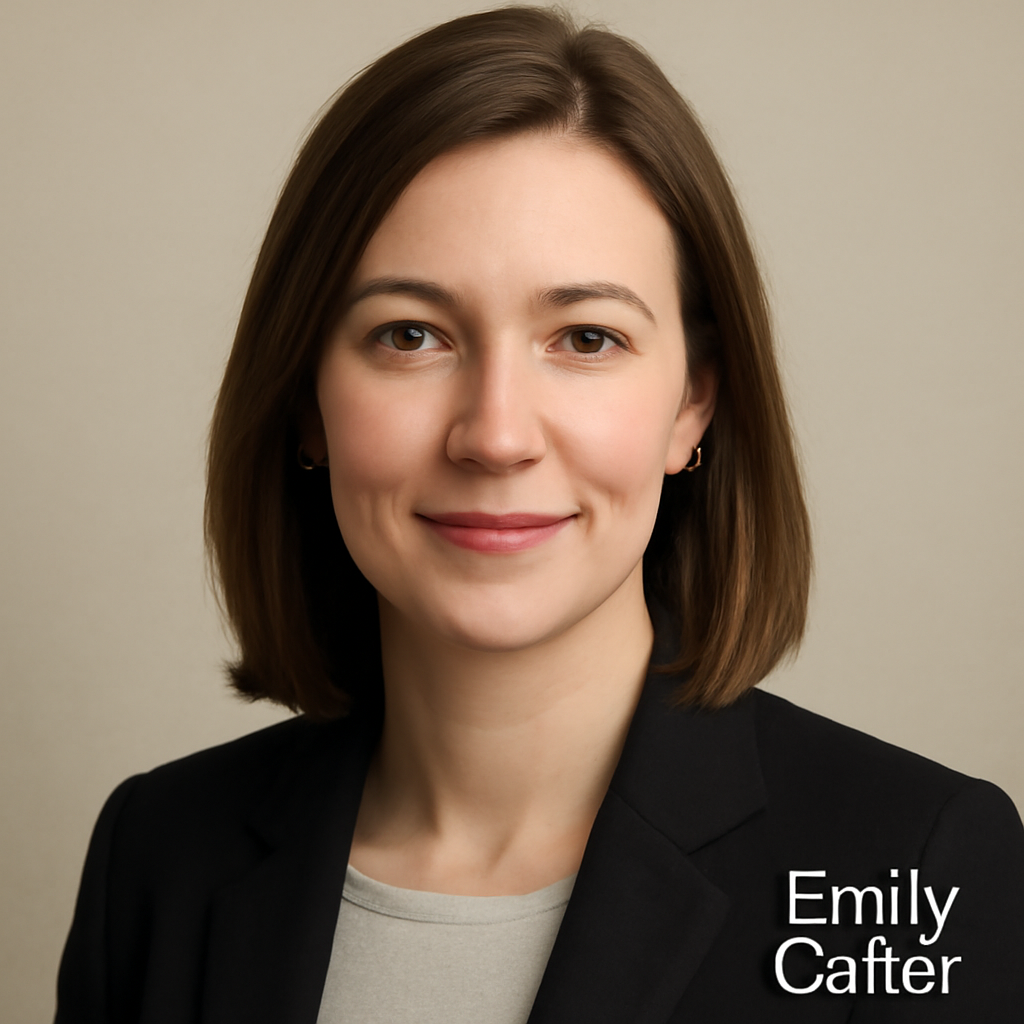
I’ve always been fascinated by how ideas shape societies and how everyday interactions reflect deeper philosophical currents. As an editor, I love curating thoughtful pieces that explore the intersection of community life and philosophical inquiry.