Social trust is the invisible glue that holds communities together, yet its origins remain elusive. Zen Buddhism, often misunderstood as a purely individual practice, offers a surprising lens through which to examine how trust emerges in human relationships. By stripping away the layers of ego, expectation, and transactional thinking, Zen reveals the raw conditions under which people begin to rely on one another. This is not about blind faith or forced harmony but about the quiet, unspoken agreements that form when individuals engage with the world without pretense. The connection between Zen and social trust lies in its emphasis on presence, mutual recognition, and the acceptance of impermanence, principles that, when applied collectively, reshape how societies function.
The Nature of Trust in Human Societies
Trust is not a static contract but a dynamic process that unfolds in the space between people. Sociologists measure it through surveys that ask whether strangers can be relied upon, whether institutions are fair, and whether neighbors will return a lost wallet. In countries like Denmark and Norway, trust levels hover around 70% to 80%, while in others, such as Brazil or the Philippines, they dip below 20%. These numbers reflect more than cultural quirks; they reveal structural conditions. High-trust societies tend to have lower corruption, stronger public services, and more resilient economies. Yet trust is not merely a byproduct of prosperity. It is also a prerequisite for it. When people assume goodwill in others, they cooperate more, take calculated risks, and invest in shared resources. The question then becomes: how do societies cultivate this assumption of goodwill, especially when history and personal experience often suggest the opposite?
Trust is not blind. It is built on repeated interactions where expectations are met, promises are kept, and violations are addressed. In small communities, this happens organically. A farmer who lends tools to a neighbor expects them to be returned, not because of a legal contract, but because the community’s survival depends on such reciprocity. In larger, anonymous societies, trust becomes more abstract. It relies on institutions, courts, banks, schools, to enforce norms and punish betrayal. But institutions themselves require trust to function. A legal system collapses if people believe judges are corrupt, just as a currency fails if no one accepts its value. This creates a paradox: trust is both the foundation and the outcome of social order. Zen enters this conversation not as a solution but as a way to reframe the problem. Instead of asking how to manufacture trust, it asks how to create the conditions where trust can emerge naturally.
Zen as a Framework for Non-Attachment in Relationships
At its core, Zen teaches non-attachment, not as indifference, but as the ability to engage fully without clinging to outcomes. In social contexts, this means interacting with others without the burden of expectation. A parent who raises a child without demanding gratitude, a colleague who offers help without calculating future favors, or a leader who makes decisions without seeking praise, these are all expressions of non-attachment in action. The difference between this and transactional relationships is subtle but profound. In a transactional world, trust is conditional. You trust someone because they have proven reliable, or because you can punish them if they fail. Trust in relationships guided by Zen philosophy reflects Zen views on cooperation and conflict, emphasizing unconditional acceptance. It is offered freely, without the mental tally of who owes whom.
This does not mean naivety. Non-attachment is not about ignoring harm or tolerating exploitation. It is about recognizing that clinging to expectations distorts perception. When you enter a conversation expecting someone to agree with you, you hear only what confirms your bias. When you help a friend expecting nothing in return, you notice their needs more clearly. The Japanese concept of amae, often translated as “dependency,” captures this dynamic. It describes the mutual trust in relationships where one person temporarily relies on another without shame or obligation. A child who cries for comfort, a student who asks for guidance, or a colleague who admits a mistake, these are moments where amae flourishes. Zen refines this further by removing the ego’s need to control the outcome. Trust, in this sense, is not something you build but something you allow to arise.
The Role of Presence in Building Social Trust
The principle of presence in Zen not only defines personal practice but also serves as a basis for fostering social compassion in Zen tradition. To be present is to engage with the person in front of you, not the version of them you’ve constructed in your mind. This sounds simple, but most human interactions are cluttered with distractions. A conversation with a coworker is interrupted by thoughts of a looming deadline. A parent listens to their child while mentally reviewing the grocery list. These small absences erode trust because they signal that the other person is not fully valued. Presence, on the other hand, communicates respect. When you listen without planning your response, when you speak without rehearsing your words, you create a space where the other person feels seen. This is the raw material of trust.
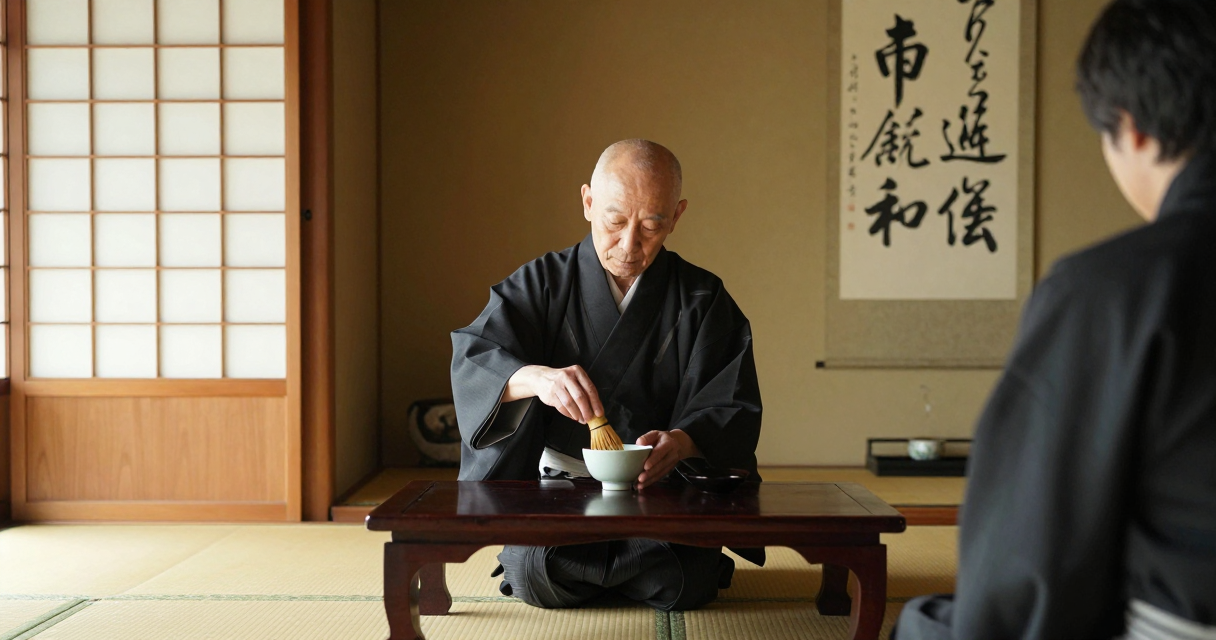
Consider the Japanese tea ceremony, or chanoyu, which is often described as a microcosm of Zen principles. The ceremony is not about the tea itself but about the shared moment. Every gesture, the way the host pours the water, the way the guest receives the cup, is deliberate and unhurried. There is no rush, no agenda, only the act of being together. This ritualized presence fosters trust because it eliminates the possibility of deception. When both parties are fully engaged, there is no room for hidden motives or half-truths. The same principle applies in everyday interactions. A manager who gives an employee their undivided attention during a meeting, a neighbor who stops to chat without checking their phone, a friend who remembers the details of your last conversation, these are all acts of presence that build trust incrementally. The challenge is that presence cannot be faked. It requires practice, which is why Zen meditation is often described as “training in attention.” The more you cultivate presence in solitude, the more naturally it extends to your relationships.
Impermanence and the Fragility of Social Bonds
Zen’s emphasis on impermanence, the idea that all things, including relationships, are transient, might seem at odds with the stability required for trust. If nothing lasts, why invest in trust at all? The answer lies in how impermanence is understood. In Zen, impermanence is not a cause for despair but a call to appreciate the present. A relationship that ends, a community that dissolves, or a promise that is broken, these are not failures but reminders of the fleeting nature of human connections. This perspective shifts how trust is approached. Instead of clinging to trust as a permanent state, Zen encourages treating it as a moment-to-moment practice. You trust your neighbor not because you believe they will never betray you, but because you choose to trust them today, in this interaction, without guarantees.
This mindset has practical implications for social trust. In high-trust societies, people are more forgiving of minor transgressions because they understand that no one is perfect. A study of Scandinavian countries found that citizens are more likely to give others the benefit of the doubt after a mistake, not because they are naive, but because they recognize that trust is a process of repair as much as it is a state of being. Impermanence also encourages humility. When you accept that your own reliability is not absolute, you become more understanding of others’ fallibility. This is not about lowering standards but about creating a culture where people feel safe to admit mistakes. A workplace where employees can say, “I don’t know” or “I messed up” without fear of punishment is one where trust thrives. Zen’s lesson here is that trust is not a fortress to be defended but a garden to be tended, constantly, patiently, and without attachment to the harvest.
The Paradox of Vulnerability in Trust-Building
Trust requires vulnerability, but vulnerability is often seen as weakness in competitive or hierarchical societies. Zen flips this script by framing vulnerability as strength. The act of trusting someone, whether by sharing a secret, asking for help, or admitting a fear, is an act of courage because it exposes you to the possibility of betrayal. Yet without this exposure, trust cannot deepen. The paradox is that the more you risk, the more trust you create. This is evident in small-scale communities, such as the kibbutzim of Israel or the ejidos of Mexico, where collective farming relies on mutual vulnerability. Farmers pool resources, share equipment, and distribute harvests based on need, not just contribution. This system only works because everyone is willing to be vulnerable, to depend on others and to be depended upon in return.
Zen practice reinforces this through its emphasis on beginner’s mind, or shoshin. To approach a situation with beginner’s mind is to let go of assumptions and meet it with openness. In social terms, this means engaging with others without the armor of cynicism or the shield of past grievances. A leader who admits they don’t have all the answers, a friend who confesses their struggles, or a community that acknowledges its failures, these are all expressions of beginner’s mind in action. They create spaces where trust can grow because they signal that it is safe to be imperfect. The challenge is that vulnerability is often punished in societies that reward self-sufficiency. A study of corporate cultures found that employees who asked for help were perceived as less competent, even when their performance improved as a result. Zen offers a counter-narrative: vulnerability is not a liability but the foundation of genuine connection. Trust, in this view, is not a transaction but a shared act of courage.
Zen Practices That Strengthen Collective Trust
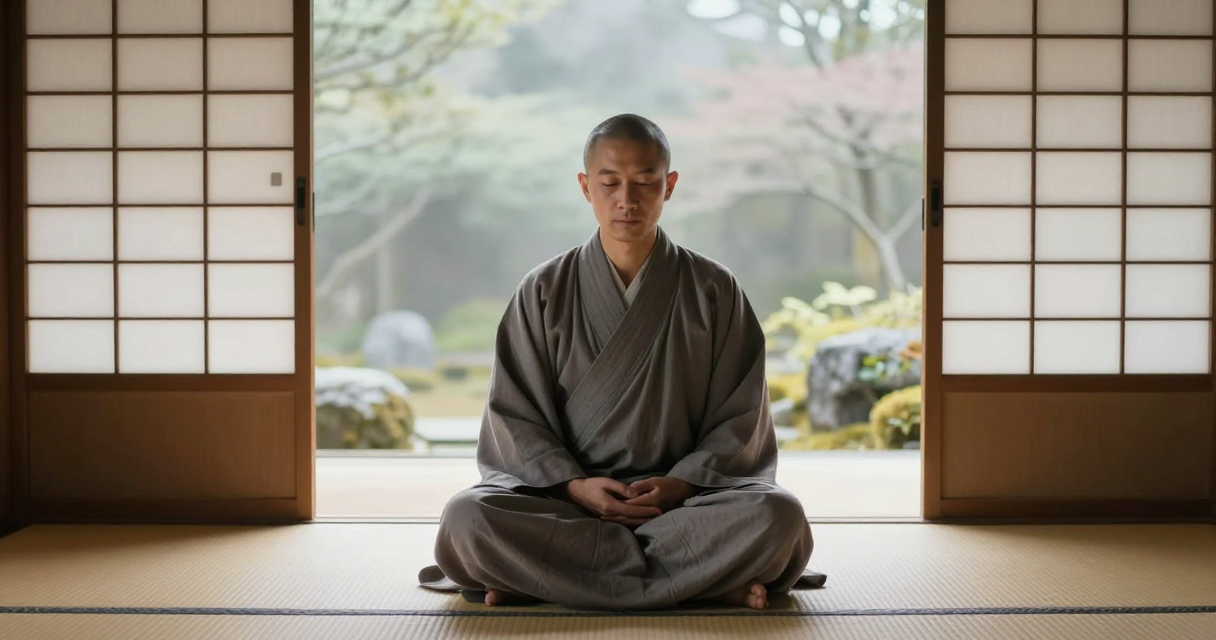
Zen is not a theoretical philosophy but a lived practice, and several of its methods can be adapted to strengthen social trust. One of the most direct is zazen, or seated meditation. While zazen is often practiced alone, its effects ripple outward. Regular meditation reduces reactivity, increases empathy, and improves emotional regulation, all of which make people more reliable and trustworthy in their interactions. A study of mindfulness programs in schools found that students who practiced meditation were more likely to resolve conflicts peacefully and less likely to engage in bullying. These outcomes are not accidental. When you train your mind to observe thoughts without acting on them, you become less likely to lash out in anger or withdraw in fear. This stability makes you a more predictable and dependable presence in the lives of others.
Another practice is kinhin, or walking meditation, which can be done in groups. In a Zen monastery, monks walk in silence, maintaining awareness of their breath and their surroundings. This simple act fosters a sense of shared purpose and mutual respect. Applied to social contexts, group walking, whether in nature or urban settings, can build trust by synchronizing movement and attention. A study of team-building exercises found that groups who walked together in silence reported higher levels of cohesion than those who engaged in traditional icebreakers. The reason is that walking side by side, without the pressure to perform or entertain, creates a sense of equality and shared experience. Finally, koan practice, the contemplation of paradoxical questions, can be adapted to group settings. A community that grapples with questions like “How can we trust without guarantees?” or “What does it mean to be reliable in an unreliable world?” creates a culture of collective inquiry. This is not about finding answers but about deepening the questions, which in turn strengthens the bonds between those who ask them.
The Limits of Zen in Addressing Systemic Distrust
While Zen offers valuable tools for building trust, it is not a panacea for systemic distrust. Societies plagued by corruption, inequality, or historical trauma cannot meditate their way out of these problems. A government official who steals public funds, a corporation that exploits workers, or a community divided by generational conflict, these issues require structural solutions, not just individual mindfulness. Zen’s limitations become apparent when its principles are co-opted to justify passivity. For example, the idea of non-attachment can be twisted into an excuse for inaction, as in “I won’t intervene in injustice because everything is impermanent.” This is a distortion of Zen’s true message, which is not about detachment from the world but about engagement without clinging. The challenge is to apply Zen’s insights without ignoring the material conditions that shape trust.
One way to bridge this gap is to integrate Zen practices with collective action. For instance, a community affected by pollution might combine meditation with advocacy, using the clarity gained from mindfulness to organize more effectively. Another approach is to use Zen principles to critique institutional trust. If trust is built on presence, then institutions that prioritize efficiency over human connection, such as automated customer service or bureaucratic red tape, inherently erode trust. A Zen-informed critique would argue that these systems fail not because they are inefficient, but because they treat people as transactions rather than as individuals. This perspective can guide reforms, such as designing public services that prioritize face-to-face interactions or creating workplace policies that encourage vulnerability. The key is to recognize that Zen is not a replacement for systemic change but a complement to it. Trust, after all, is not just a personal virtue but a social resource, and like all resources, it must be cultivated with intention and care.

I’ve always been fascinated by how ideas shape societies and how everyday interactions reflect deeper philosophical currents. As an editor, I love curating thoughtful pieces that explore the intersection of community life and philosophical inquiry.