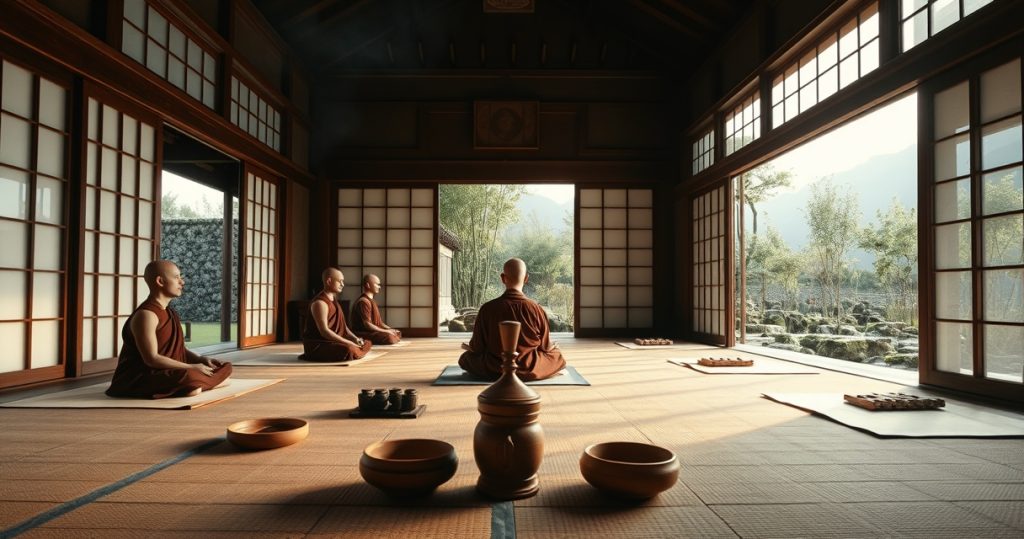
In the quiet corners of modern life, where screens glow and notifications demand attention, the idea of shared humanity often feels like a relic. Yet Zen Buddhism, with its roots in ancient practice and its branches reaching into contemporary social thought, offers a radical proposition. It suggests that the boundaries we erect between self and other, between individual and society, are not fixed but fluid. This perspective does not merely sit on the shelf of abstract philosophy. It shapes how communities form, how conflicts dissolve, and how people navigate the daily tensions of living together. When Zen speaks of shared humanity, it does not mean a vague sense of goodwill. It points to a lived experience where the suffering of one becomes the suffering of all, and where the joy of one ripples outward like water in a pond.
The Social Ground of Zen Practice
Zen is often mistaken for a solitary pursuit, a path walked in silence by individuals seeking personal enlightenment. This misconception overlooks the deeply social nature of its origins. The monasteries of Tang Dynasty China were not retreats from society but microcosms of it. Monks lived in close quarters, shared meals in silence, and worked together in the fields. The famous Zen saying “when hungry, eat, when tired, sleep” was not an invitation to isolation but a reminder that even the most basic human needs are met within a web of relationships. The rice a monk ate was grown by others, the roof over his head built by the hands of many. This interdependence was not a philosophical abstraction but a daily reality, one that shaped the way Zen practitioners understood their place in the world.
In contemporary settings, this social ground manifests in unexpected ways. Urban Zen centers in cities like New York or Tokyo function as communal spaces where people from different backgrounds gather to sit in meditation. The act of sitting together, without conversation, creates a silent solidarity. Studies on group meditation have shown measurable reductions in stress levels among participants, not just individually but across the group. This phenomenon, known as social coherence, highlights how Zen practice fosters not just personal growth but also strengthens collective bonds, aligning with the principles of Community Building Through Zen Practice. The practice becomes a shared resource, a way of stabilizing a community in times of crisis or uncertainty.
Emptiness as a Foundation for Equality
The Zen concept of emptiness, or śūnyatā, is often misunderstood as a nihilistic void. In social philosophy, however, it serves as a powerful equalizer. Emptiness does not mean nothingness but the absence of fixed, independent existence. When applied to human identity, it dissolves the rigid categories that society uses to divide people. Race, class, gender, and nationality are not inherent truths but constructs that gain power through repetition and belief. Prominent Zen figures, including Thich Nhat Hanh, have applied Zen Perspectives on Human Relationships to challenge and redefine social hierarchies. In his writings on engaged Buddhism, he argues that the illusion of separation is the root of oppression. If we see ourselves as fundamentally separate from others, we justify exploitation, violence, and indifference. But if we recognize that our identities are interdependent, the logic of domination collapses.
This perspective has practical implications for social movements. The civil rights struggles of the 20th century, for example, were not just about legal rights but about shifting collective consciousness. Martin Luther King Jr. often spoke of the “beloved community,” a vision of society where the artificial barriers between people dissolve. While King was not a Zen practitioner, his philosophy aligns with the Zen emphasis on interbeing. The idea that “I am because you are” mirrors the Zen understanding of emptiness. It suggests that equality is not a goal to be achieved but a reality to be recognized. When activists chant “no justice, no peace,” they are not just making a demand. They are pointing to the truth that peace and justice are inseparable, that the suffering of one is the suffering of all.
The Role of Mindfulness in Collective Action
While mindfulness, a core Zen practice, is frequently seen as a method for individual relaxation, its deeper role as Mindfulness as a Social Practice is often overlooked. In the context of shared humanity, however, it becomes a political act. When a person sits in meditation and observes their thoughts without judgment, they are not just calming their mind. They are training themselves to see the world as it is, not as they wish it to be. This clarity is essential for effective social action. Movements that lack mindfulness risk replicating the very systems they seek to dismantle. Anger, while a valid response to injustice, can harden into dogma if not tempered by awareness. For years, Zen teacher Joan Halifax has collaborated with activists, using Zen Teachings on Compassionate Action to help them develop resilience and empathy through the “strong back, soft front” approach. The soft front represents compassion, the willingness to remain open to the suffering of others.
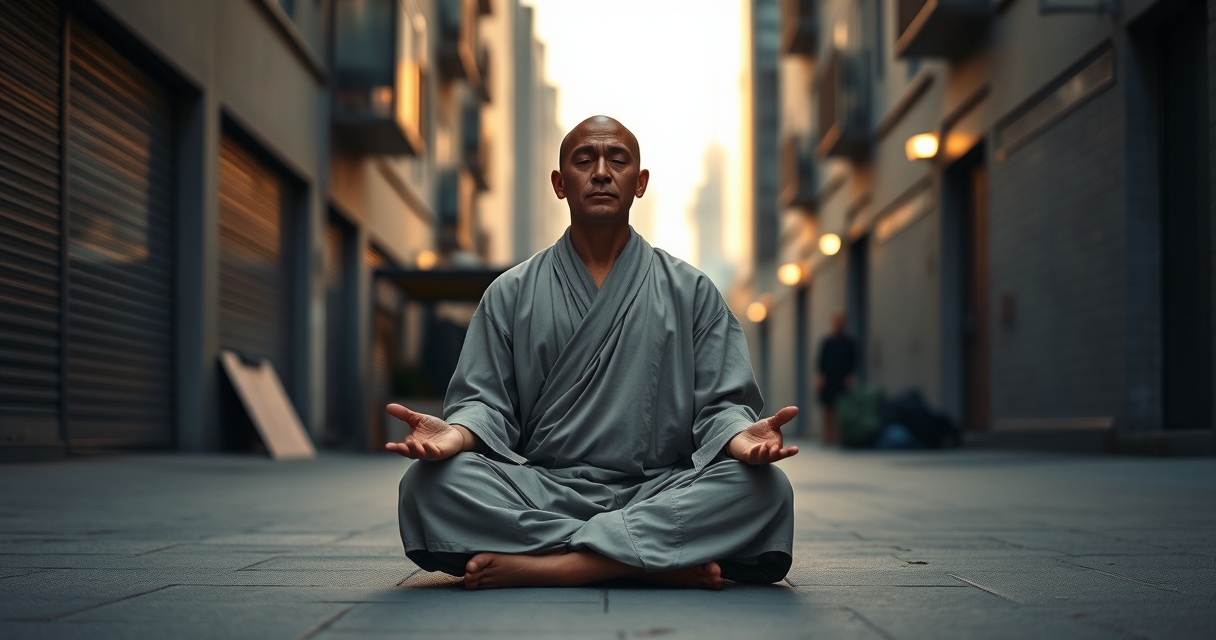
This balance is evident in the work of organizations like the Zen Peacemakers, founded by Bernie Glassman. Their street retreats, where participants spend days living among the homeless, are not charity but a form of deep listening. By immersing themselves in the lives of others, participants break down the mental barriers that separate “us” from “them.” The practice of bearing witness, a core Zen discipline, becomes a way of acknowledging shared humanity. In one retreat in Auschwitz, participants sat in silence for hours, not to solve the problem of genocide but to confront its reality. The goal was not to fix the past but to transform the present, to recognize that the pain of history lives on in the divisions of today.
Zen and the Ethics of Care in Modern Society
The ethics of care, a concept developed by feminist philosophers like Carol Gilligan, finds a natural ally in Zen thought. Care is not just a moral duty but a recognition of interdependence. In Zen monasteries, the practice of samu, or work meditation, turns mundane tasks into acts of service. Washing dishes, sweeping floors, and tending gardens are not chores but expressions of care for the community. This ethic extends beyond the monastery walls. In Japan, the tradition of mottainai, a sense of regret over waste, reflects a Zen-inspired respect for resources. It is not just about recycling but about recognizing that every object, every piece of food, is the result of countless human and natural efforts. To waste is to disregard the labor and lives that made it possible.
In modern societies, where individualism often trumps collective well-being, this ethic of care is radical. The COVID-19 pandemic provided a stark example. Countries that prioritized collective care, such as New Zealand and South Korea, fared better than those that framed the crisis as a matter of personal freedom. Zen teacher Roshi Joan Sutherland has written about how the pandemic revealed the illusion of self-sufficiency. When supply chains broke down and hospitals overflowed, it became clear that no one is an island. The choice to wear a mask, to stay home, was not just a personal decision but an act of care for the most vulnerable. This is the Zen ethic in action. It asks not “what is best for me” but “what is best for all of us.”
Art as a Mirror of Shared Humanity
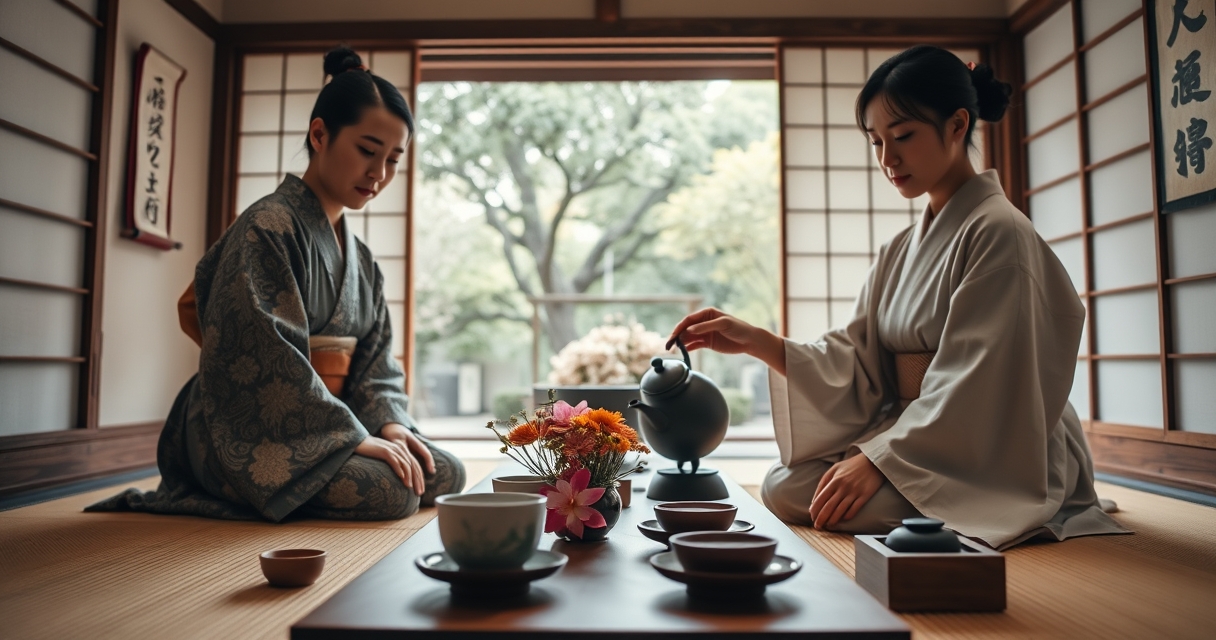
Art has always been a bridge between the personal and the collective. In Zen, the act of creation is not about self-expression but about revealing the interconnectedness of all things. The Japanese tea ceremony, for example, is not just a ritual but a performance of shared humanity. Every movement, from the pouring of the water to the placement of the cup, is an acknowledgment of the guest, the host, and the generations of practitioners who came before. The tea itself, grown in distant fields, carries the stories of farmers, traders, and artisans. The ceremony becomes a microcosm of society, a moment where the boundaries between self and other dissolve.
Contemporary artists continue this tradition in different forms. Ghanaian painter Kojo Marfo, for instance, creates figures that blend cultural symbols from Africa, Europe, and the Americas. His work does not tell a single story but weaves together the threads of shared human experience. The faces in his paintings are not individuals but archetypes, representing the universal emotions of joy, sorrow, and longing. This is not abstract idealism. It is a recognition that the struggles and dreams of a Ghanaian farmer are not so different from those of a factory worker in Detroit or a student in Tokyo. Art, in this sense, becomes a tool for empathy, a way of seeing the world through another’s eyes. The Zen approach to art is not about beauty for beauty’s sake but about revealing the hidden connections that bind us all.
The Challenge of Zen in a Fragmented World
The principles of Zen and shared humanity are simple to state but difficult to live. Modern societies are built on fragmentation. Social media algorithms reinforce echo chambers, politics encourages tribalism, and economic systems reward competition over cooperation. In this environment, the Zen call to see beyond the self can feel naive. Yet history shows that the most transformative social changes often begin with small, stubborn acts of recognition. The Truth and Reconciliation Commission in South Africa, for example, was not just a legal process but a collective act of bearing witness. Perpetrators and victims sat together, not to forget the past but to acknowledge its weight. This was not forgiveness in the abstract but a concrete step toward shared humanity. The Zen practice of zazen, or sitting meditation, offers a similar path. It is not about escaping the world but about seeing it clearly, with all its contradictions and conflicts.
The challenge is not to reject the complexities of modern life but to engage with them from a place of awareness. Zen does not offer easy answers. It does not promise that social change will be painless or quick. What it provides is a way of being in the world that refuses to accept division as inevitable. The philosopher Simone Weil, who was deeply influenced by Eastern thought, wrote that “attention is the rarest and purest form of generosity.” This is the heart of Zen in society. It is not about grand gestures but about the daily practice of paying attention, of recognizing the humanity in others, even when it is inconvenient. In a world that often feels broken, this may be the most radical act of all.

I’ve always been fascinated by how ideas shape societies and how everyday interactions reflect deeper philosophical currents. As an editor, I love curating thoughtful pieces that explore the intersection of community life and philosophical inquiry.